



Makeup for Olive Undertones: A Practical Shade Guide
Olive undertones can appear on light, medium, or deep skin. The defining feature is not depth; it is a muted green, golden, or slightly gray cast beneath the surface. Once you separate undertone from skin depth, shade matching becomes much easier.
How to tell whether your undertone is olive
Look at your bare skin in indirect daylight, not under a warm bathroom bulb. Olive skin may make many foundations appear too pink, too orange, or unusually yellow. Jewelry and vein “tests” can offer clues, but they are not definitive because surface redness, lighting, and natural variation affect what you see.
- Compare one neutral, one warm, and one olive-labeled foundation along the jaw.
- Let swatches sit for several minutes so you can see whether the formula changes color as it dries.
- Choose the shade that seems to disappear into both your face and neck.
- If two shades are close, prioritize undertone first and adjust depth with a small mix.
For a deeper undertone primer, read our guide to identifying and matching undertones.
Foundation and CC cream for olive skin
Words such as olive, neutral-olive, golden-neutral, and muted golden can be helpful starting points, but labels vary by brand. Swatching remains the most reliable step.
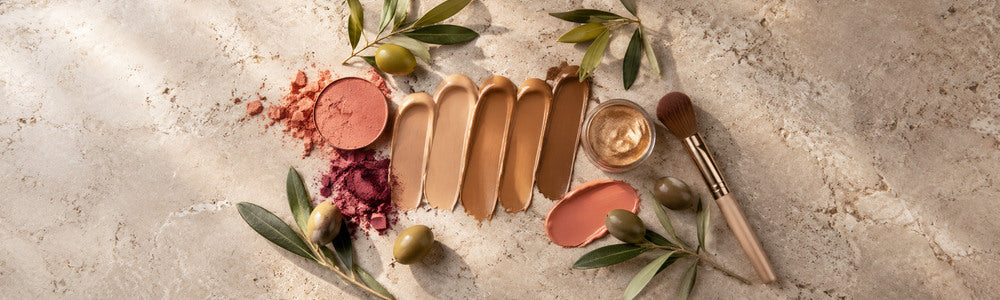
A sheer product is more forgiving than opaque foundation because some natural skin variation remains visible. Organic CC Cream with SPF 45 offers sheer, buildable color correction; select the closest shade by testing it in daylight. Its tint can complement a sun-care routine, but apply enough sunscreen to meet the label directions rather than relying on a thin makeup layer alone.
Blush, lip, eye, and glow colors
Blush
Muted peach, terracotta, rose, berry, and warm mauve often sit beautifully beside olive undertones. The best choice still depends on contrast and personal taste. Apply a small amount, then build.
Lips
Try caramel nude, rose-brown, brick, berry, or blue-red. If a nude shade looks gray, add a little warmth; if it looks orange, move toward a more muted rose-brown.
Eyes
Bronze, copper, taupe, plum, forest green, and deep brown create easy harmony. There is no need to avoid cool tones—balance them with the rest of the look.
Body glow
For a warm luminous finish on shoulders or legs, Organic Gold Shimmer Body Lotion adds cosmetic light reflection without changing your skin tone. Apply sparingly where light naturally catches.
A five-minute olive-undertone routine
- Moisturize and apply sunscreen.
- Blend a sheer complexion product from the center of the face outward.
- Add blush to the apples or upper cheek, depending on your preferred effect.
- Define eyes with brown, bronze, or plum.
- Finish with a lip color that repeats either the warmth or muted quality of the look.
Makeup has no expiration date tied to a trend year. Use color theory as a tool, not a rulebook.
Frequently Asked Questions
Can olive skin be cool-toned?
Yes. Olive describes a green or muted cast, and it can lean warm, neutral, or cool.
Why does foundation turn orange?
The undertone may be too warm, the shade may be too deep, or the formula may visibly change as it dries. Compare dried swatches in daylight.
Do I need green primer?
Not automatically. Green corrector is intended to visually offset redness; use it only where redness is something you want to reduce.