


Natural and Organic Skincare Ingredients: What Matters Most
Natural or organic origin does not automatically make an ingredient safer or more effective. What matters is the complete formula: ingredient function, concentration, preservation, packaging, stability, intended use, and compatibility with your skin.
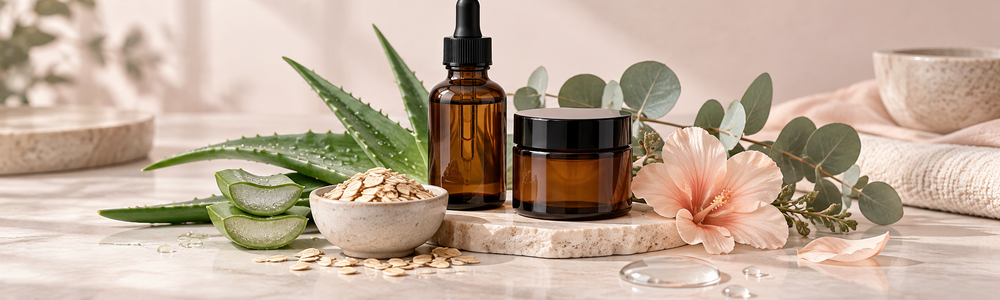
Plant oils, botanical extracts, aloe, clays, and other naturally derived materials can contribute moisture, texture, cleansing, or antioxidant support. They can also irritate an individual. Thoughtful skincare looks beyond a featured ingredient and evaluates the whole product.
Four questions to ask about any ingredient
- What is its job? A humectant attracts water, an emollient softens, an occlusive reduces water loss, and an exfoliant loosens surface buildup.
- Is the formula appropriate? A useful ingredient still needs compatible supporting ingredients, suitable packaging, and an effective preservation system when water is present.
- Does it fit your skin? Dry, oily, reactive, and acne-prone skin may respond differently.
- Are the claims specific? Clear cosmetic language is more useful than sweeping promises.
Ingredient categories for smoother-looking skin
Humectants
Ingredients such as glycerin and hyaluronic acid help attract water and support a plumper, more comfortable appearance.
Emollients
Plant oils and squalane can soften rough-feeling areas and improve slip.
Antioxidants
Vitamin C and botanical antioxidants can complement a routine focused on radiance and environmental exposure.
Gentle exfoliants
Appropriate acids or mild physical exfoliation may improve surface smoothness, but overuse can disrupt comfort.
The active Organic Hyaluronic Acid Serum – Plumping Hydration 1 oz. is a verified lightweight hydration option. For antioxidant-focused care, Organic Vitamin C Serum 20% – Brightening Treatment with Hyaluronic & Ferulic Acid is the current product page.
How to read organic and natural claims
Look for a complete ingredient list and a clear explanation of what the certification or sourcing claim covers. “Organic,” “natural,” “clean,” and “non-toxic” are not interchangeable. FDA states that cosmetic labeling must be truthful and not misleading; disease-treatment claims can change how a product is legally regulated.
The clean beauty and ingredient safety guide explains those terms in more detail.
Build the routine before chasing ingredients
A well-chosen cleanser, moisturizer, and daytime sun protection usually matter more than collecting many fashionable actives. Add one targeted serum at a time and use the skincare layering guide to organize the steps.
For the full framework, continue to the complete clean beauty routine or simplify further with the minimalist skincare guide.
Natural skincare FAQ
Are natural ingredients always gentle?
No. Botanical extracts, fragrance components, and essential oils can irritate some people.
Does organic mean the entire product is certified?
Not necessarily. Read the exact claim and determine whether it applies to the finished product, selected ingredients, or agricultural sourcing.
Should I replace my entire routine at once?
No. Introduce products gradually so it is easier to identify what works well for your skin.