




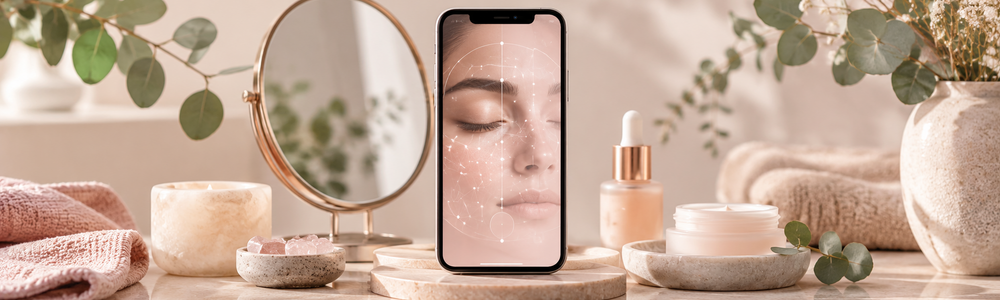
How AI Skin Analysis Works—and What It Cannot Diagnose
AI skin analysis is a cosmetic product-matching aid. It can organize visible features from a selfie or answers from a questionnaire, then suggest skincare categories or products. It cannot diagnose a disease, evaluate a changing spot, or replace an examination by a qualified clinician.
A personalized skincare tool can make a large catalog feel easier to navigate. Its value is practical: it helps translate the information you provide into a shorter list of options. The result should be treated as a starting point, not a medical conclusion or a prediction of how your skin will respond.
What happens during an AI skin analysis?
Image-based tools use computer vision to identify patterns in a photograph. Depending on the system, the output may describe visible texture, shine, uneven-looking tone, dryness, or fine lines. Questionnaire tools use your stated skin type, sensitivities, preferences, and goals instead of an image.
Selfie route
A clear, front-facing image supplies visual information. Lighting, camera quality, makeup, filters, angle, and focus can all change the output.
Questionnaire route
Your answers supply the context. This is useful when you prefer not to share a photograph or cannot take a consistent image.
The complimentary Glimmer Goddess® Skin Advisor offers both routes. It connects the information you choose to provide with existing product options; it does not create a prescription or a medical assessment.
Why results have limits
Every image-analysis system is affected by its training data and by the quality of the submitted image. Peer-reviewed research has identified representation and standardization challenges in dermatology-focused AI, particularly across a full range of skin tones. That evidence concerns medical applications, but it reinforces an important consumer principle: technology output is not infallible.
- Use even, neutral lighting and avoid beauty filters.
- Remove makeup when practical so it does not mask visible surface features.
- Review the tool’s privacy information before sending a facial image.
- Choose the questionnaire if a photo feels uncomfortable or unreliable.
- Reassess recommendations when your routine, climate, or skin response changes.
What AI skin analysis cannot do
Do not use a cosmetic skin scan to evaluate a rash, painful area, infection, sudden change, bleeding spot, or persistent irritation. Those concerns belong with a qualified healthcare professional.
It also cannot guarantee compatibility. A well-matched cosmetic may still irritate an individual. Review the ingredient list, introduce one change at a time, and follow a thoughtful patch-testing process.
How to turn recommendations into a simple routine
- Begin with essentials. A suitable cleanser, moisturizer, and daytime sun protection may be enough at first.
- Add one targeted step. Select a serum only when it addresses a clear cosmetic goal.
- Layer thoughtfully. Use the skincare layering guide to place products in a sensible order.
- Observe your skin. Comfort and consistency matter more than the number of products in the routine.
For readers new to daily care, the beginner skincare routine guide provides a calm framework for building habits gradually.
AI skin analysis FAQ
Is a selfie required?
No. A questionnaire-based path is available for people who prefer not to provide a photograph.
How accurate is the result?
It depends on the image, your answers, the system, and its underlying data. Use the result as shopping guidance, not a definitive assessment.
Should I still consult a dermatologist?
Yes, for a new, changing, painful, bleeding, persistent, or otherwise concerning skin issue.
Use technology as a guide, not a verdict
A useful skin advisor narrows choices while leaving the final decision—and medical questions—in human hands.