



Skin Hydration and Moisture: The Foundation of Radiance
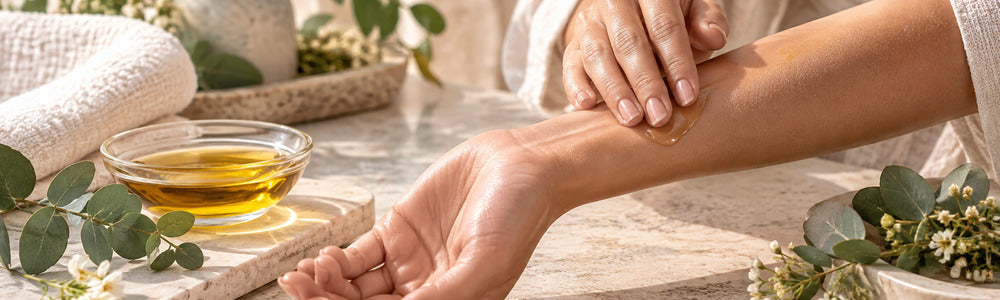
Hydration refers to water in the outer layers of skin, while moisture care also includes the oils and barrier-supportive ingredients that help keep that water from escaping. A routine that combines both can make skin look smoother, more comfortable, and more luminous.
Dry skin and dehydrated skin are not identical
Dry skin is a skin type that tends to produce less oil. Dehydration is a temporary condition that can affect any skin type, including oily skin. Tightness, rough texture, and more visible fine lines may accompany dehydration, but these signs can overlap with irritation and other concerns.
The three-part hydration strategy
- Add water-binding ingredients. Humectants such as hyaluronic acid and glycerin help attract and hold water at the skin surface.
- Support softness. Emollients smooth spaces between surface cells.
- Slow water loss. Creams and oils form a light seal that helps water stay in the skin.
The Organic Hyaluronic Acid Serum can provide a lightweight hydration step. Apply it to slightly damp skin and follow with moisturizer. For dry body skin, the American Academy of Dermatology recommends choosing a cream or ointment rather than a lotion when richer support is needed; see its moisturizer-selection guidance.
Where face masks fit
A mask is an occasional supplement, not a substitute for daily moisturizer. Hydrating formulas may temporarily improve comfort and surface smoothness, while exfoliating or clay masks can be drying if overused. The AAD advises matching a mask to your skin type and stopping if it causes itching, burning, or stinging in its face-mask guidance.
A simple routine for dehydrated-looking skin
- Cleanse gently with lukewarm water.
- Apply a hydrating serum to slightly damp skin.
- Seal with a moisturizer suited to your skin type.
- Use broad-spectrum sunscreen every morning.
- Add a compatible mask occasionally, following its directions.
Frequently asked questions
Can drinking more water replace moisturizer?
General hydration supports health, but topical moisturizer still plays a distinct role in reducing water loss from the skin surface.
Does hydrated skin erase dark spots?
No. Hydration can make texture look smoother and more reflective, but persistent pigmentation needs sun protection and an appropriately chosen care plan.