



Body Butter vs. Lotion: Which Moisturizer Fits Your Skin?
Body butter and body lotion share one goal: helping skin feel softer and more comfortable. The difference is mainly texture, oil-to-water balance, and the kind of experience you want from your moisturizer.
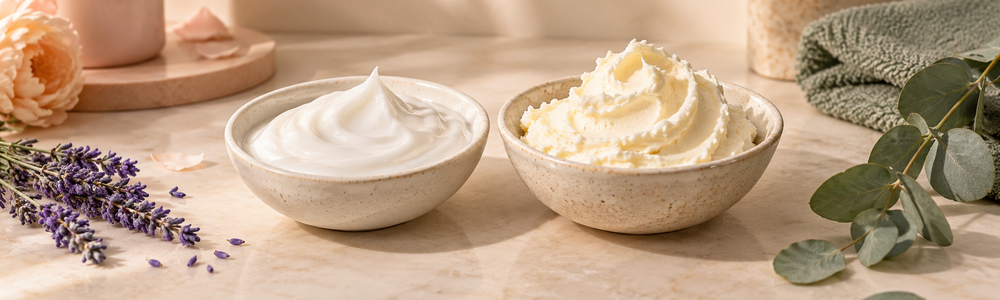
Lotion is usually lighter and easier to spread. Body butter is generally richer and more occlusive, making it a natural choice for very dry areas or a slower evening ritual. Neither format is universally better.
Body butter vs. lotion at a glance
- Lotion: lighter feel, quick spread, convenient for daily full-body use and warm weather.
- Body butter: richer feel, more cushion, useful for rough areas and dry-weather routines.
- Best choice: the texture you will use consistently and that keeps your skin comfortable.
The American Academy of Dermatology notes that creams contain more oil than lotions and are generally more hydrating, while thicker ointment-style products are the most occlusive. Body butter is not a regulated texture category, but it usually sits on the richer end of that spectrum.
Choose lotion when you want lightweight coverage
A lotion can be ideal after a daytime shower, during humid seasons, or whenever you want to dress soon after moisturizing. Water-rich emulsions tend to spread easily over arms and legs. The Organic Coconut Milk Body Lotion offers a lighter option for everyday softness without the dense feel of a butter.
Lotion may also suit people who dislike residue or want a pump-friendly product. Apply it while skin is slightly damp to help retain water from bathing.
Choose body butter for richer comfort
Body butter works well when skin feels tight, flaky, or rough, especially on elbows, knees, heels, and hands. Its richer oils and butters can create a more protective-feeling layer. The Organic Whipped Body Butter for Extremely Dry Skin is designed for that more intensive moisturizing experience.
If your skin is reactive, choose a scent you already tolerate or opt for fragrance-free care when available. “Organic” or plant-based ingredients can still trigger sensitivity.
Can you use both?
Yes. A practical routine can be flexible:
- Use lotion across the body after most showers.
- Layer body butter only on stubborn dry spots.
- Switch to the richer texture during cold, dry weather.
- Use a lighter lotion on humid days or before getting dressed.
Application matters as much as format
Pat skin lightly after bathing rather than drying it completely. Smooth on moisturizer within a few minutes, then add a second thin layer to rough zones if needed. Aggressive exfoliation is not the answer to very dry, peeling skin; the AAD recommends prioritizing moisture and avoiding practices that strip the barrier.
For a broader strategy, read our skin barrier care guide and seasonal skincare adjustments.
Frequently asked questions
Is body butter only for winter?
No. You can use it year-round on dry areas, though many people prefer less product or a lighter texture in humid weather.
Will body butter clog pores?
Rich products may feel too heavy on acne-prone areas. Keep dense body formulas away from areas that break out easily if you notice congestion.
How often should I moisturize?
Daily after bathing is a useful baseline. Reapply to hands or especially dry areas whenever they feel tight.
Bottom line: choose lotion for light, fast everyday hydration and body butter for a richer, more protective feel. The best routine may include both.